A sudden vehicular collision breaks the rhythm of a standard daily commute in an instant. Screeching tires, the harsh crunch of metal, and the sudden deployment of airbags leave drivers disoriented and stressed. In those critical first moments following an impact on a busy highway or neighborhood street, clear thinking can prevent secondary accidents and establish a solid foundation for physical, financial, and mechanical recovery.
The first action after any impact is assessing immediate physical safety. Drivers and passengers should check themselves and others for injuries before attempting to move. If the vehicle is still operational and positioned in active traffic, moving it to the shoulder or a nearby parking lot reduces the risk of another vehicle crashing into the scene.
Once everyone is out of immediate danger, contacting emergency dispatchers is essential. Police officers document the scene, gather initial statements from all involved parties, and create an official collision report. This document carries significant weight during subsequent liability determinations. While waiting for law enforcement to arrive, taking photographs of the accident site provides vital evidence. Photos should capture the position of all vehicles, skid marks, road conditions, traffic signs, and visible damage from multiple angles.
Clearing a disabled vehicle off the roadway requires professional assistance. Relying on licensed towing services ensures that the damaged vehicle is moved without causing additional frame or drivetrain harm. Operators trained in flatbed transport can secure cars with compromised suspension or bent axles, preserving the vehicle state for damage adjusters. Drivers should always request a clear receipt detailing where the vehicle is being taken and the exact costs involved.
After securing transport for the vehicle, notifying the relevant auto insurance company kicks off the formal claims process. Providing accurate, factual information to the representative without admitting fault keeps the record clean while the investigation gets underway. Prompt reporting prevents unnecessary delays in getting rental vehicles assigned and getting physical damage estimates scheduled.
Protecting Legal Rights and Managing Claims

Navigating the administrative aftermath of a vehicle collision involves far more than just filling out standard claim forms. Claims adjusters represent the financial interests of their respective firms, meaning their goal is often to minimize payouts whenever possible. Vehicle owners frequently find that initial settlement offers fall short of covering complete repair costs, rental car expenses, and potential medical bills resulting from delayed-onset soft tissue injuries.
Understanding legal rights early in the process protects drivers from accepting premature settlements that release negligent parties from future liability. Recorded statements requested by insurance adjusters can be structured in ways that inadvertently shift fault onto the driver. Staying guarded, sticking strictly to verified facts, and declining to give recorded statements before consulting an attorney helps protect the driver’s legal standing.
When disputes regarding liability emerge, or when injuries require ongoing medical attention, partnering with a knowledgeable car accident lawyer provides critical advocacy. A legal representative conducts an independent investigation into the collision, obtains traffic camera footage, interviews eyewitnesses, and consults reconstruction experts if necessary. This thorough preparation levels the playing field against corporate legal teams and ensures all damages are properly valued.
Calculating the true cost of an accident requires looking beyond immediate cosmetic auto damage. Lost wages from missed workdays, reduced future earning capacity, physical therapy needs, and long-term diminished vehicle resale value must all enter the negotiation equation. Legal professionals compile medical records, expert repair estimates, and wage documentation to build a comprehensive demand package for the insurer.
In cases where the fault is shared or contested, state-specific comparative negligence laws come into play. These regulations dictate how compensation is adjusted based on each driver’s percentage of responsibility. Having experienced legal representation ensures that fault is assigned accurately based on hard evidence rather than speculation. Drivers who secure proper legal guidance generally achieve settlements that reflect the true financial impact of the event, allowing for full recovery without out-of-pocket strain.
Maintaining clear documentation of all communication with involved parties keeps the recovery timeline on track. Keeping a dedicated folder containing medical receipts, towing invoices, police reports, and conversation records prevents administrative errors.
Uncovering Hidden Damage and Structural Assessment
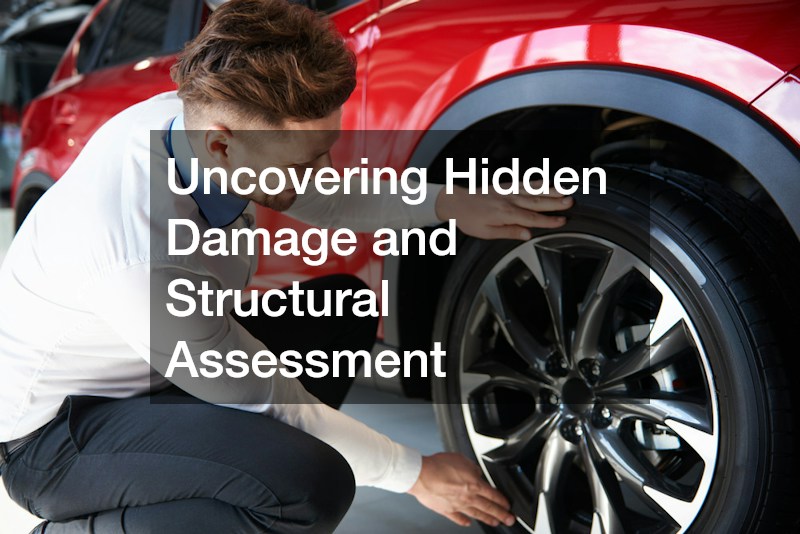
Vehicles involved in moderate or high-speed crashes often suffer severe internal trauma that remains invisible during a quick visual walkaround. Crumple zones are designed to absorb energy during impact, protecting the occupant cabin by deforming strategically. However, this absorption means that beneath intact plastic bumpers, subframes, structural crossmembers, and suspension mounts may be significantly bent or cracked.
Bringing the vehicle to a certified mechanic is the first step toward uncovering these hidden structural issues. Professional technicians position the car on specialized computerized frame-measuring equipment to check its dimensions against factory specifications. Even a millimeter of frame misalignment can compromise handling, cause uneven tire wear, and reduce structural integrity in future impacts. Restoring the unibody frame back to OEM tolerance standards requires hydraulic pulls and precise laser measuring technology.
Beyond the structural frame, the braking system frequently suffers collateral damage during a hard collision. The intense pressure applied during emergency stops, combined with physical impact forces, can rupture hydraulic lines, crack calipers, or warp brake rotors. In addition, electrical wiring harnesses tied to anti-lock braking systems and electronic stability control modules can sever or short out upon impact.
Scheduling a comprehensive brake repair service ensures every component of the stopping mechanism undergoes rigorous evaluation. Technicians inspect brake pads for stress cracks, test hydraulic fluid pressure, replace damaged brake lines, and verify that sensor feedback loops function correctly. Ensuring the vehicle can stop safely under all driving conditions is non-negotiable before approving any post-collision vehicle for road use.
Modern vehicles also feature complex advanced driver-assistance systems, including forward collision warning sensors and automated emergency braking hardware mounted behind front grilles and windshields. These sensors require delicate recalibration following structural repairs.
Thorough inspections must also cover safety restraint components. Airbag deployments trigger internal sensors that require replacement alongside seatbelt pretensioners, which lock up permanently during a severe slowdown. Replacing these safety mechanisms with genuine original equipment manufacturer parts guarantees that occupant protection systems operate flawlessly if another incident occurs down the road.
Restoring Power, Fluid Systems, and Exhaust Efficiency
Impact forces traveling through the vehicle chassis often disrupt vital engine components, cooling circuits, and exhaust assemblies. Radiators can crack, causing rapid coolant leaks that lead to severe engine overheating within minutes of driving. Intake manifolds, motor mounts, and air intake tubes can also fracture, allowing unfiltered air and debris to enter the combustion chambers and accelerate mechanical wear.
Exhaust systems running underneath the vehicle floorboard are especially vulnerable to rear-end impacts and undercarriage scraping during a collision. Misaligned pipes can leak toxic carbon monoxide into the cabin or create backpressure issues that choke engine performance. When severe impact crushes or shatters internal ceramic substrates inside emission control devices, full catalytic converter replacements become necessary to restore proper exhaust flow and maintain environmental compliance.
Fluid contamination is another common consequence of vehicle accidents. Extreme shock forces can break internal seals, allowing engine oil, transmission fluid, and coolant to mix. Running an engine with contaminated or depleted lubricants causes immediate friction damage across bearings, camshafts, and pistons. Performing immediate fluid flushes and routine oil changes post-collision clears out metallic shavings, dirt particles, and foreign fluids that entered damaged reservoirs during the crash.
Electrical wiring harnesses beneath the hood require meticulous inspection as well. Pinching wires against metal brackets can cause intermittent short circuits, blown fuses, or unexpected battery drain. Technicians must trace wiring paths, replace damaged connector housings, and verify stable voltage levels throughout the vehicle’s electrical network before clearing the car for delivery.
Addressing these mechanical and fluid systems restores engine smooth operation and prevents long-term reliability issues. Skipping fluid service or exhaust restoration can lead to engine failure weeks after the initial body repairs are finished. Complete restoration requires systematic testing of thermal management, exhaust flow, and lubrication dynamics.
In addition, driving with compromised engine mounts or misaligned exhaust hangers introduces harsh vibrations that stress structural welds over time. Resolving engine mount fractures and securing loose exhaust brackets creates a quiet, smooth ride while extending the lifespan of critical engine components.
Rebuilding Body Panels and Shielding the Finish
Restoring a vehicle’s outer appearance after a crash involves specialized craftsmanship that merges structural alignment with flawless cosmetic refinishing. Body panels made from steel, aluminum, or composite materials require different techniques to shape, patch, or replace. High-impact collisions typically demand panel replacement, while minor dents can be smoothed using traditional body hammers or paintless dent repair methodologies.
Choosing a certified facility for auto repair ensures that technician teams follow factory-recommended repair standards. Panels must be aligned with consistent gap tolerances around doors, hoods, and trunks to prevent wind noise, water leaks, and latching issues. Properly aligned panels also preserve aerodynamic efficiency and prevent premature wear on door hinges and latches.
Once panel repairs and structural shaping are complete, the vehicle moves into the paint booth. Surface preparation is crucial: technicians sand down rough edges, apply corrosion-resistant primers, and meticulously clean panels to remove oil and dust. Using computerized color-matching tools, painters blend factory paint formulations to match the existing paint, accounting for subtle UV fading on older vehicles.
Multiple layers of base coat and clear coat are applied in climate-controlled environments to replicate original factory paint depth and gloss. After curing under heat lamps, technicians polish the surface to eliminate imperfections such as orange peel or microscopic dust nibs, restoring a smooth mirror finish across all refinished surfaces.
Protecting this new finish against future road hazards is an essential final step. Applying auto paint protection clear films or ceramic coatings shields freshly painted surfaces from rock chips, road salt, bird droppings, and harsh weather. These protective barriers make routine washing easier while preserving color depth, ensuring the vehicle looks showroom-ready for years to come.
Quality auto body restoration also includes treating raw metals beneath body panels with rust-inhibiting sealers. Unprotected metal exposed during repairs can rust rapidly when exposed to humidity and rain. Professional body shops apply anti-corrosion cavity waxes inside door frames and rocker panels, safeguarding hidden metal surfaces against moisture damage that could weaken the vehicle structure over time.
Rebalancing the Chassis and Returning to the Road
The final phase of collision recovery focuses on wheel geometry, tire integrity, and road performance testing. Suspension components absorb tremendous kinetic force during a collision. Control arms, tie rods, struts, and sway bar links can bend easily, disrupting steering responsiveness and compromising vehicle stability at highway speeds.
A comprehensive chassis inspection requires mounting the vehicle on a high-precision wheel alignment rack. Laser sensors evaluate toe, camber, and caster angles against original factory standards. Incorrect toe angles cause tires to scrub along the road surface, while improper camber wears down inner or outer tire shoulders rapidly. Correcting these angles restores neutral handling, straight-line tracking, and predictable steering feedback.
Tires themselves often sustain hidden structural damage during impacts. Internal cord breakage, sidewall bulging, or tread separation can occur without causing immediate air loss. A visit to a trusted tire shop allows specialists to unmount tires, inspect internal liners for hidden damage, balance wheel rims, and replace compromised rubber with properly speed-rated tires.
Wheel rims also demand close inspection. Cast aluminum wheels can develop hairline cracks or subtle bends along the inner lip during curb impacts. These defects cause persistent air leaks and severe high-speed vibrations. Repairing or replacing bent rims ensures proper tire bead seating and eliminates unwanted vibration through the steering column.
Before handing the keys back to the owner, technicians conduct comprehensive multi-mile road tests across varying road surfaces. These tests verify proper transmission shifting, noise-free suspension travel, straight braking, and correct operation of instrument cluster warnings. Once all systems pass road testing, the owner receives a detailed repair log verifying that the vehicle meets all safety standards.
Returning to normal driving routine brings peace of mind when every repair stage has been handled systematically. By coordinating legal protections, mechanical overhauls, body restoration, and suspension balancing, vehicle owners ensure their car remains safe, reliable, and valuable. Following a methodical post-collision playbook transforms a stressful event into a structured journey back to complete driving confidence.
Keeping all post-collision repair records, alignment prints, and inspection certificates inside the vehicle glove compartment provides tangible proof of quality restoration if the vehicle is sold later.