
- Minor dents with intact paint are ideal for DIY repair and can often be fixed using simple tools like plungers or dent puller kits.
- Proper preparation, including cleaning the area and choosing the right repair method, significantly improves results.
- Popular beginner-friendly techniques include the plunger method, heat-and-cold method, and glue puller approach.
- Avoid common mistakes such as applying excessive force, using sharp tools, or attempting repairs on deep creases.
- Combining dent repair with skills like how to repair car scratches helps achieve a complete cosmetic restoration.
- Professional repair is recommended for deep dents, structural damage, or dents with cracked paint to prevent further issues.
Car dents are almost unavoidable, whether caused by minor parking mishaps, shopping carts, or unexpected weather conditions. While dents can make your vehicle look neglected, not all damage requires expensive professional repair. With the right tools, patience, and guidance, beginners can successfully fix minor dents at home and restore their car’s appearance.
This beginner-friendly guide explains practical methods, essential tools, and safety precautions to help you achieve effective results. You will also learn when DIY repairs are appropriate and when professional help is necessary. By following these steps carefully, you can save money while gaining useful automotive maintenance skills.
Understanding Car Dents and When DIY Repair Works
Before attempting any repair, it is important to understand the type and severity of the dent. Not all dents respond well to DIY methods, especially those involving deep creases, paint damage, or structural issues. Minor dents with intact paint are ideal candidates for beginner repair techniques.
Small dents typically occur on doors, bumpers, and fenders where metal or plastic panels flex easily. These areas respond well to pressure-based methods like plungers or dent pullers. However, dents located on edges or reinforced panels may require specialized tools or professional assistance.
A careful inspection helps you determine the best repair approach. Look for paint cracks, sharp folds, and panel misalignment before deciding to proceed. Identifying these factors ensures realistic expectations and prevents accidental damage during the repair process.
Common Types of Car Dents
- Round dents from impact
- Shallow dents with no paint damage
- Plastic bumper dents
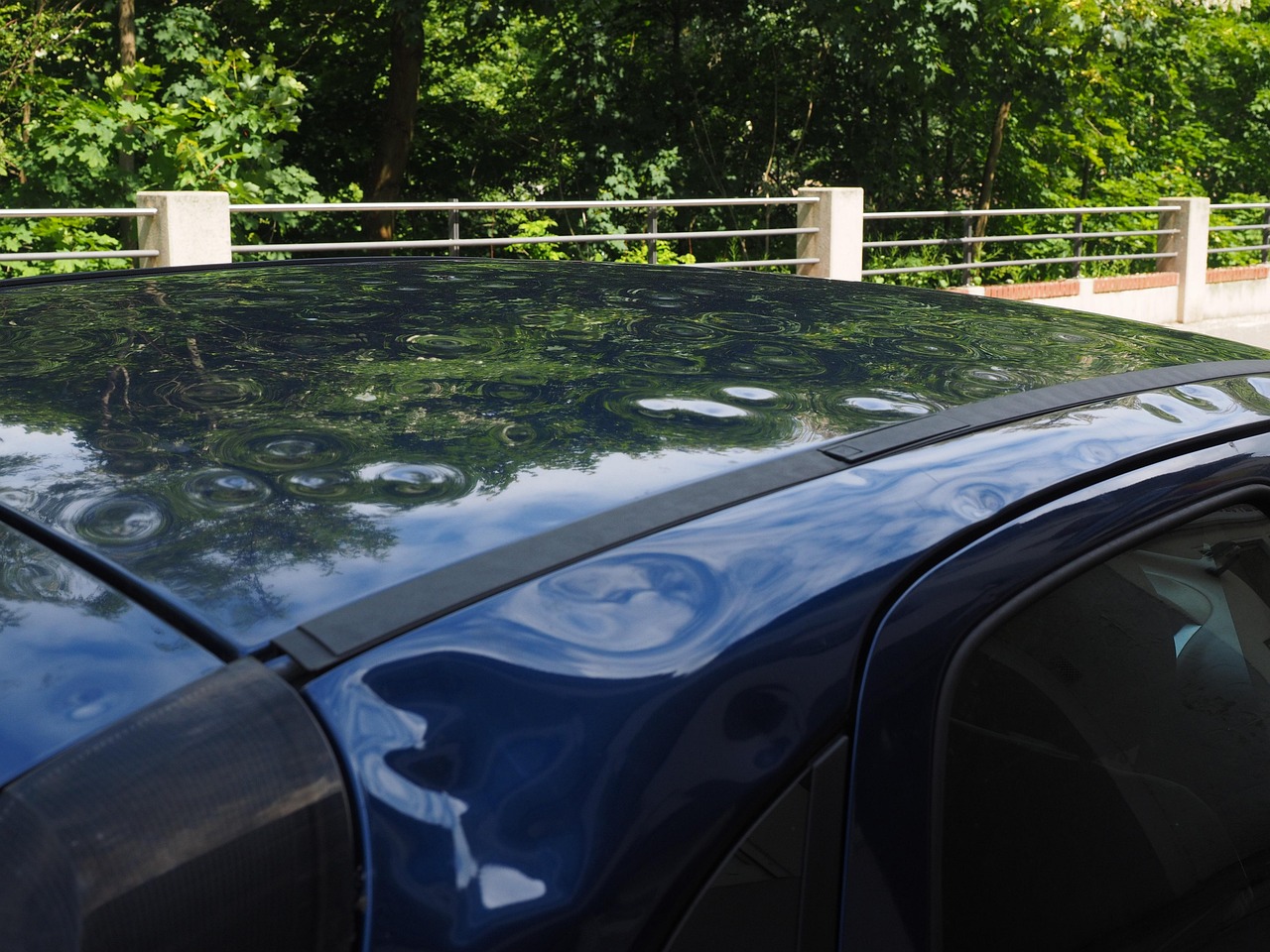
- Hail damage dents
- Creased dents (harder to repair)
Essential Tools and Materials Beginners Need
Having the right tools greatly increases your chances of a successful repair. While professional body shops use specialized equipment, beginners can achieve good results with affordable and widely available tools. Preparing your workspace and gathering materials beforehand prevents interruptions and improves efficiency.
Basic dent repair tools are designed to apply controlled pressure to reshape panels without damaging paint. Many beginner kits include dent pullers, glue tabs, and hand tools that are easy to use. Household items can also serve as effective alternatives for minor repairs.
Safety should remain a priority throughout the process. Protective gloves, clean cloths, and proper lighting help maintain precision while preventing injuries. Investing in quality tools ensures better durability and long-term usefulness for future car maintenance tasks.
Beginner Tool Checklist
- Plunger or suction dent puller
- Heat source (hair dryer)
- Compressed air or cold spray
- Glue dent puller kit
- Microfiber cloths
- Protective gloves
- Mild car soap and water
How to Repair a Dent in a Car: Step-by-Step DIY Guide for Beginners
Repairing a dent requires patience and a systematic approach to avoid worsening the damage. Beginners should start with the simplest techniques before progressing to advanced methods. The goal is to gradually restore the panel’s original shape while preserving paint integrity.
Preparation is the first step in achieving good results. Clean the dented area thoroughly using mild soap and water to remove dirt and debris. This prevents scratches and ensures proper suction or adhesive bonding during the repair process.
Next, choose a repair method based on dent size and panel material. Plastic panels respond well to heat-based techniques, while metal panels may benefit from suction or glue puller methods. Working slowly and applying consistent pressure improves the chances of a smooth finish.
Step-by-Step Repair Process
- Wash and dry the dented area.
- Apply heat using a hair dryer for plastic panels.
- Use a plunger or dent puller to create suction.
- Pull gently until the panel pops back.
- For stubborn dents, use a glue puller kit.
- Polish the area to restore shine.
What DIY Dent Repair Methods Work Best?
Different dent repair methods work depending on dent size, depth, and panel material. Beginners should experiment with gentle techniques first to avoid damaging the paint. Many DIY methods rely on temperature changes, pressure, or adhesive pulling to reshape panels.
The plunger method is one of the easiest and most effective approaches for shallow dents. It creates suction that gradually pulls the metal or plastic back into place. Similarly, the heat-and-cold method uses expansion and contraction to release dent tension.
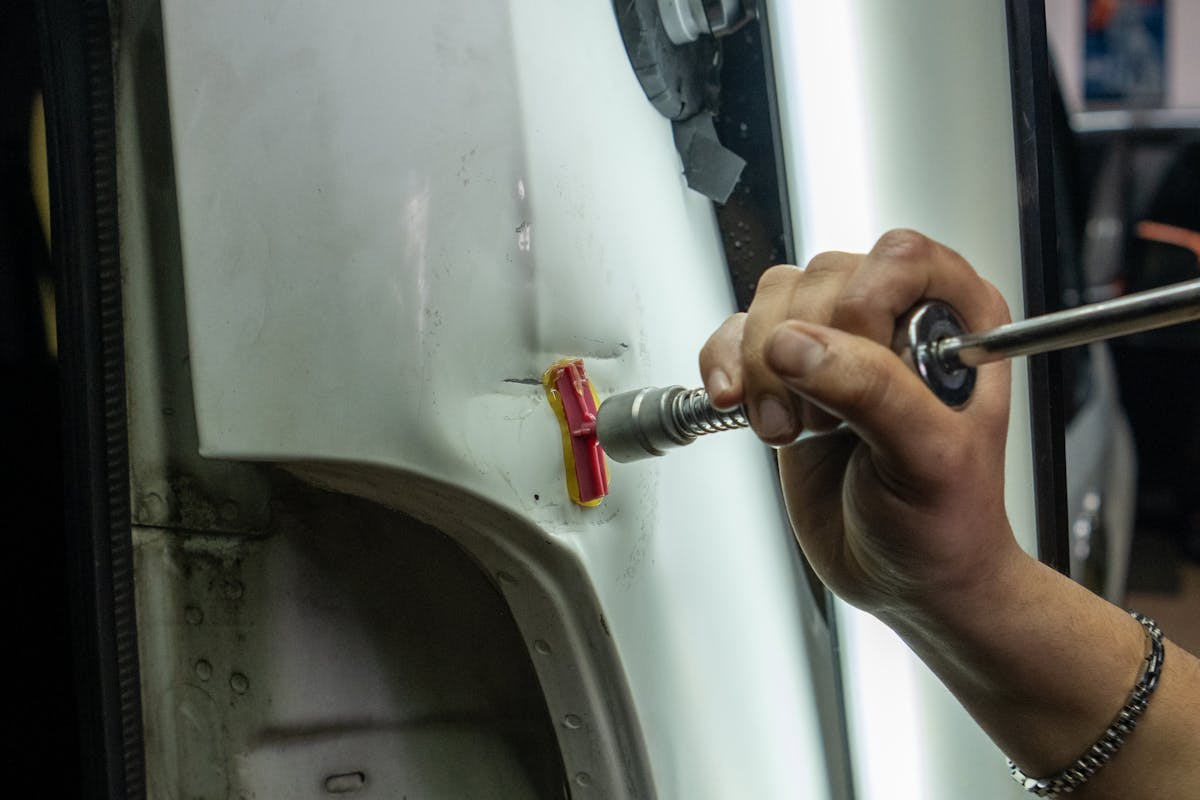
Glue puller kits offer more precision for moderate dents that resist suction methods. These kits attach temporary tabs that allow controlled pulling without harming the paint. Choosing the right technique improves efficiency and reduces the need for repeated attempts.
Popular DIY Dent Repair Techniques
- Plunger suction method
- Heat and compressed air method
- Glue puller technique
- Boiling water method (plastic bumpers)
- Paintless dent repair (PDR)
Mistakes Beginners Should Avoid During Dent Repair
Many DIY dent repair attempts fail due to avoidable mistakes, such as applying excessive force or skipping preparation steps. Beginners often underestimate the importance of patience, leading to uneven panel surfaces or paint damage. Understanding common errors helps improve results and prevents costly corrections.
Using inappropriate tools can also cause additional dents or scratches. For example, metal objects may damage paint or create sharp creases that are harder to fix. Always choose tools specifically designed for automotive repair or safe household alternatives.
Another common mistake is ignoring related damage, such as scratches. Learning complementary skills, including how to repair car scratches, helps achieve a complete restoration rather than focusing solely on dent removal.
Key Mistakes to Avoid
- Applying too much pressure
- Skipping cleaning and preparation
- Using sharp or rigid tools
- Attempting repairs on creased dents
- Ignoring paint damage
When Should You Seek Professional Dent Repair?
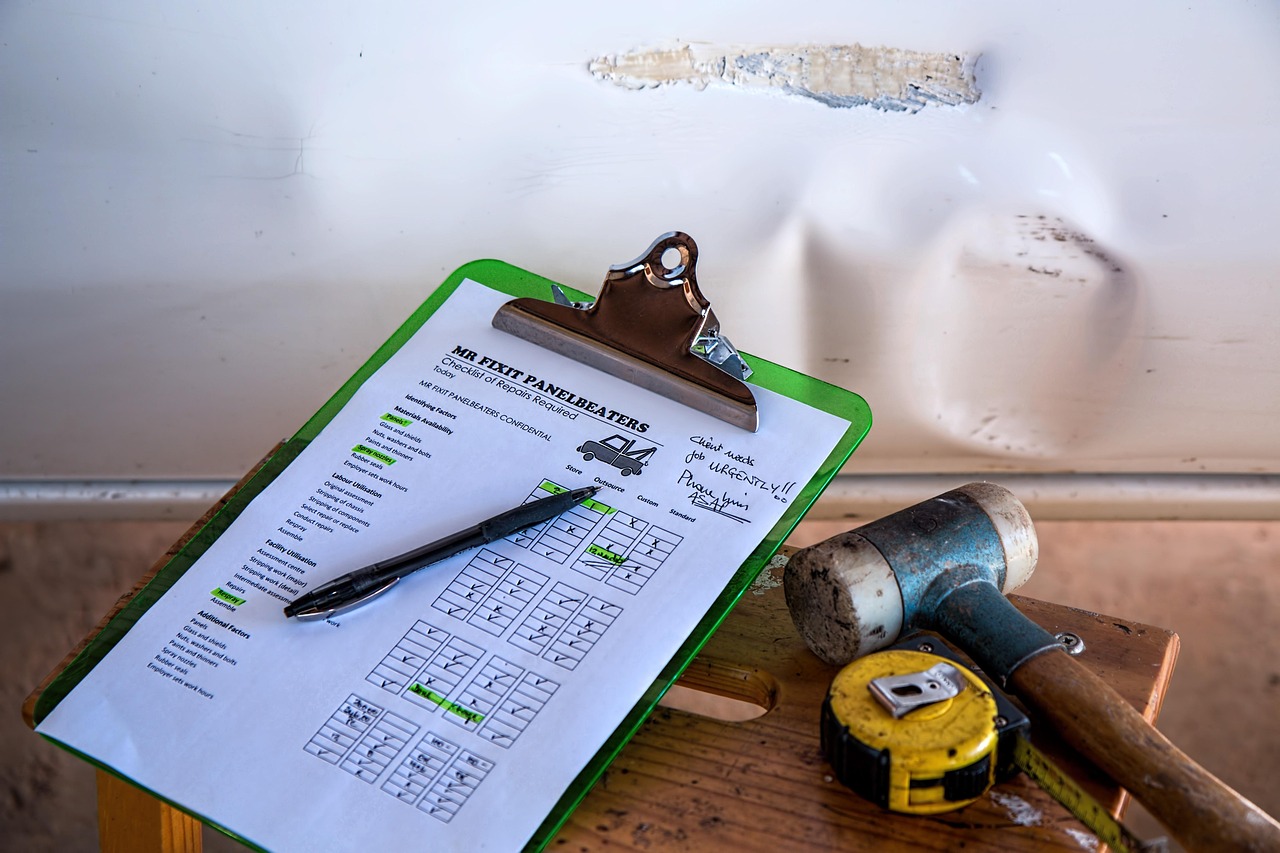
DIY dent repair works best for minor cosmetic damage, but some situations require professional expertise. Deep dents, sharp creases, and dents with paint cracks often demand specialized tools and advanced techniques. Attempting DIY repairs in these cases may worsen damage or increase repair costs.
Structural dents affecting safety components should never be handled at home. These areas require precise alignment and professional assessment to maintain vehicle integrity. Insurance coverage may also apply to significant dent damage, making professional repair more practical.
Understanding your limitations ensures better decision-making and protects your vehicle’s value. When in doubt, consult an experienced technician before proceeding with DIY methods.
Conclusion
Learning how to repair a dent in a car empowers beginners to maintain their vehicle’s appearance without expensive professional services. By understanding dent types, preparing the right tools, and following step-by-step techniques, minor dents can be fixed safely at home. Patience and proper method selection remain key factors in achieving smooth, professional-looking results.
While DIY repairs are effective for small dents, recognizing situations that require professional help is equally important. Combining dent repair knowledge with complementary maintenance skills helps preserve your car’s value and appearance over time.